2026 Planner Template: Your All-in-One Organizing System for Real Life in 2026
If you’ve ever opened a blank notebook only to abandon it by February—or scrolled endlessly through apps that don’t quite stick—then the 2026 Planner Template isn’t just another printable. It’s a grounded, no-fluff system built for how people actually live, work, and care for themselves in the year ahead.
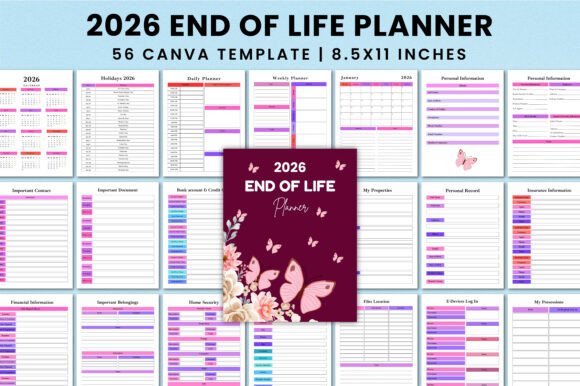
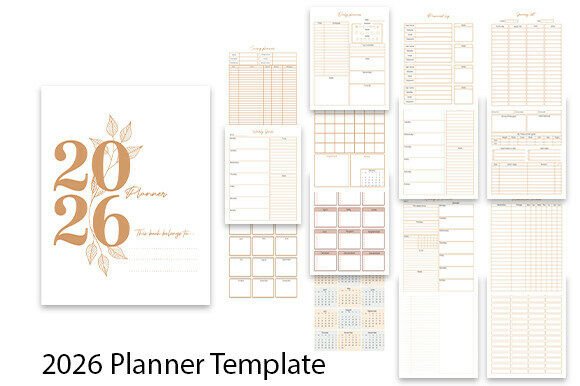
This isn’t a single-purpose tool. It’s a 75-page, CMYK-print-ready collection designed around real rhythms: the weekly rhythm of your team meeting and gym class, the monthly rhythm of rent day and your sister’s birthday, the seasonal rhythm of spring cleaning and back-to-school prep. Whether you’re launching a side hustle, managing chronic health needs, homeschooling two kids, or juggling freelance deadlines while recovering from surgery—the 2026 Planner Template meets you where you are.
Where It Fits Into Everyday Life (Without Adding More Work)
You don’t need to “start planning” to use this. You just need to be living. That means:
- On your desk at 7:15 a.m. — flipping to the Daily planner page while your coffee brews, jotting down today’s top three non-negotiables (not “respond to all emails,” but “call pharmacy about refill,” “send client draft,” “walk 30 mins before lunch”).
- In your tote bag during a pediatrician visit — pulling out the Doctor visits and Medication tracker pages to log dosage changes and next appointment dates, then snapping a photo to reference later.
- At the kitchen table on Sunday night — reviewing the Weekly Goals and Habit track pages alongside your partner, adjusting your shared Cleaning schedule after realizing “vacuum hallway” keeps getting skipped.
- While grocery shopping with your phone dead — checking off items from the printed Grocery list and adding last-minute staples to the Shopping list margin without needing Wi-Fi or app permissions.
It works because it doesn’t ask you to change your habits—it supports them. No syncing, no notifications, no subscription. Just clear structure, intentional white space, and thoughtful categories like Birthdays to remember (with room for gift ideas) and Monthly important dates (for tax deadlines, insurance renewals, or your nephew’s soccer playoffs).
Who Uses It—and Why It Sticks
A freelance graphic designer uses the Yearly Event and Weekly Planner pages to block time for client revisions, portfolio updates, and skill-building workshops—without overbooking or forgetting that one conference application deadline in March.
An educator building lesson plans for the 2025–2026 school year prints the Yearly goals and Monthly important dates pages to hang beside their desk—mapping parent-teacher conferences, standardized testing windows, and curriculum review cycles across the full academic calendar.
A small business owner tracking inventory, vendor payments, and staff PTO prints the Saving planner and Contact list pages, then laminates them for quick annotation behind the counter. The Password log (with optional encryption reminder prompts) stays tucked in a locked drawer—not on a cloud service they haven’t audited.
And someone managing long-term health goals uses the Fitness goal and Habit track pages not as rigid scorecards, but as gentle reflection tools—recording energy levels, sleep quality, and movement type (not just minutes), so patterns emerge without pressure.
What’s Inside—and What That Actually Means for You
The 2026 Planner Template includes AI, PDF, SVG, and high-resolution JPEG files—all at 300 DPI and CMYK color—so whether you print at home, take it to a local print shop, or import into design software for customization, color accuracy and sharpness hold up.
But more than file types, it’s about intentionality in layout:
- The Today page isn’t just a date box—it includes space for mood check-in, priority triage (what *must* happen vs. what *could*), and a tiny gratitude line. Small, yes—but it shifts focus before the day spirals.
- The Cleaning schedule is broken into zones (kitchen, bathroom, living area) with rotating frequency options—so you’re not stuck doing “deep clean the whole house” every Saturday, but rotating tasks across weeks based on real capacity.
- The Contact list has fields for relationship context (“Maya – yoga studio owner, referred me to acupuncturist”) and follow-up notes—not just phone numbers. Useful when networking feels transactional.
- The Grocery list and Shopping list are separate for a reason: one’s for routine staples (milk, oats, dish soap), the other for project-based buys (paint brushes, router cable, birthday candles). Less mental clutter at the store.
Before You Download: A Few Practical Considerations
This isn’t a magic fix—but it is a lever. Its usefulness depends less on perfection and more on consistency of access and low-friction use. Ask yourself:
- Where will you keep it? If your desk is already crowded, consider printing only the sections you’ll use weekly (e.g., Daily planner, Weekly Goals, Habit track) and binding them into a slim booklet. The full 75-page version shines when you want everything in one place—like a dedicated planner notebook or wall-mounted master calendar.
- How do you respond to paper vs. digital? If you habitually forget to open apps but always have a pen nearby, this will likely stick. If you rely heavily on calendar alerts and shared family schedules, treat the 2026 Planner Template as your analog anchor—not your sole source of truth.
- What’s your tolerance for handwriting? It’s designed for writing—not typing. There’s no auto-fill, no search function, no undo button. But there *is* space to cross things out, add arrows, sketch a quick chart, or paste a sticky note. That flexibility matters when life gets messy.
Also worth noting: the Monthly important dates and Yearly Event pages include pre-marked U.S. federal holidays—but leave room to add local observances, cultural celebrations, or personal milestones. It’s structured enough to guide, open enough to adapt.
Real Outcomes—Not Just Features
People don’t buy planners to “have a planner.” They buy them to reduce decision fatigue, protect time for what matters, remember what they care about, and feel grounded amid constant change.
With the 2026 Planner Template, that looks like:
- Remembering your cousin’s chemo appointment because it’s logged in Doctor visits *and* flagged in Birthdays to remember (her birthday falls the week after).
- Sticking with a hydration habit because the Habit track page sits right next to your morning coffee mug—not buried in an app you open once a month.
- Feeling confident handing off household logistics to your partner because the Cleaning schedule, Grocery list, and Medication tracker are all in the same binder—no guessing, no miscommunication.
- Launching your Etsy shop on time because the Yearly goals and Weekly Planner pages helped you break “build website” into weekly micro-tasks—and track progress visually.
The 2026 Planner Template won’t make time expand. But it does help you use yours with more clarity, compassion, and quiet confidence—starting January 1, 2026, and continuing all the way through December 31.