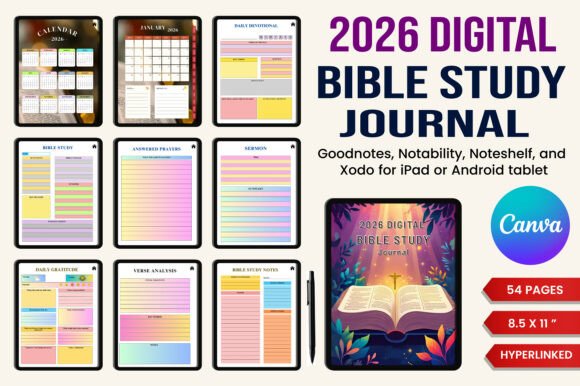
2026 Digital Bible Study Journal: A Practical Tool for Intentional Spiritual Growth
The 2026 Digital Bible Study Journal is a structured, faith-centered digital planner built for adults who want consistency—not perfection—in their spiritual habits. Unlike generic planners or static printable PDFs, it integrates biblical reflection, liturgical rhythm, and personal accountability into one cohesive system. It’s not just a collection of blank pages; it’s a thoughtfully sequenced resource that supports daily devotional practice, sermon engagement, gratitude cultivation, and prayer discipline across the full 2026 calendar year.
What Sets the 2026 Digital Bible Study Journal Apart
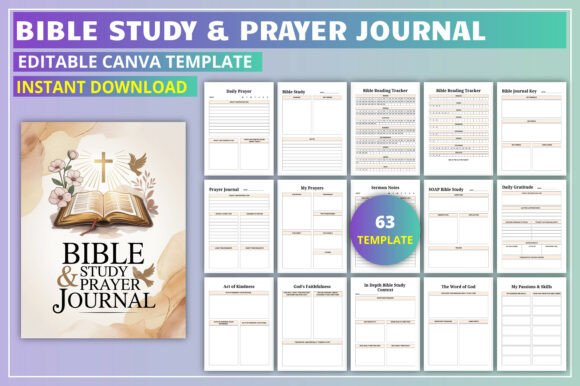
Its distinction lies in how its features interlock. The 2026 Calendar isn’t just decorative—it anchors each section to real time: monthly overviews help set spiritual intentions, weekly spreads include space for both Scripture reading plans and life logistics, and daily layouts pair a short verse with guided reflection prompts—not open-ended journaling alone. This structure reduces decision fatigue, especially for those who’ve tried (and paused) paper journals or app-based devotionals.
Prayer is treated as both relational and recordable. Rather than a single “prayer page,” the 2026 Digital Bible Study Journal includes dedicated sections for requests, answered prayers, and prayer strategy—like thematic lists (e.g., “family,” “vocation,” “local church”) that can be reviewed quarterly. Similarly, the gratitude tracker isn’t isolated; it’s paired with mood affirmations and tied to weekly reflection questions that ask, “Where did I notice God’s presence this week?” That intentional linking helps users see patterns—not just entries.
Bible study tools go beyond note-taking. The included verse analysis worksheets prompt users to identify genre, historical context, original language clues (with accessible explanations), and personal application—all without requiring seminary training. Sermon notes pages align with common teaching formats: space for the main passage, key illustrations, cross-references, and a “what changed in my thinking?” line. These aren’t passive receptacles—they’re designed to spark active processing.
How It Compares With Other Approaches
Digital Bible study tools fall broadly into three categories: app-based platforms (like YouVersion or Logos), printable PDF planners (often minimalist or theme-driven), and editable design templates (such as Canva-based resources). The 2026 Digital Bible Study Journal sits at the intersection of the last two—but with notable differences.
Compared to many printable PDF planners, it offers greater functional depth: built-in trackers for tithes and offerings, integrated prayer-gratitude correlation charts, and reflection prompts grounded in theological literacy—not just positivity. Yet unlike apps, it requires no subscription, no algorithmic curation, and no data sharing. Users retain full control over content, privacy, and pacing.
Its Canva integration adds flexibility most static PDFs lack. With 54 editable templates, users can adjust colors, fonts, or layout emphasis—say, enlarging the gratitude section for a season of hardship, or simplifying the sermon notes page when attending shorter talks. That adaptability matters for long-term use: a planner that can evolve with your spiritual season is more likely to stay relevant than one locked into a fixed design.
Strengths and Realistic Tradeoffs
A core strength is its rhythm-aware design. Because it follows the 2026 calendar—including Sundays, major Christian observances, and seasonal shifts—it supports liturgical awareness without demanding expertise. Someone new to Advent or Lent can follow along using the journal’s built-in prompts and scripture pairings.
Another strength is low technical barrier. It works on tablets, laptops, or printed copies—no syncing, no login, no updates required. For users wary of digital overload or inconsistent Wi-Fi access, that reliability is meaningful.
However, tradeoffs exist. It doesn’t include audio or video resources, nor does it offer community features like shared prayer groups or discussion forums. If you rely heavily on multimedia teaching or accountability partnerships, this journal complements—but doesn’t replace—those tools. Likewise, while the templates are editable in Canva, users need basic familiarity with the platform to customize deeply. Those completely new to Canva may spend 20–30 minutes learning navigation before diving in.
It also assumes a baseline level of self-direction. There’s no automated reminder system, no progress dashboard, and no adaptive content. That’s by design: it empowers intentionality, not dependency. But for someone needing external nudges or behavioral scaffolding (e.g., habit streaks, gentle notifications), pairing it with a simple calendar alert or habit-tracking app may be helpful.
Best-Fit Situations—and When to Look Elsewhere
The 2026 Digital Bible Study Journal tends to serve well for adults who:
- Want to deepen personal Bible engagement but feel overwhelmed by unstructured journaling;
- Attend weekly services and want a consistent way to process sermons beyond highlighting a verse;
- Are exploring stewardship practices—including tithing—and value tangible record-keeping;
- Prefer digital tools but prioritize privacy, simplicity, and ownership over convenience features;
- Have tried physical journals but struggled with consistency due to portability, duplication, or loss.
For example, a 34-year-old teacher with early-morning devotions and Sunday worship might use the daily devotional spread during breakfast, fill in sermon notes right after church, and review answered prayers every Friday evening—using the same file across devices. The ability to print individual pages (e.g., just the gratitude tracker for a small group) adds practical versatility.
It may be less ideal for those who:
- Prefer voice-to-text journaling or require screen-reader compatibility (the current PDFs are not optimized for assistive tech);
- Need collaborative editing—say, for a married couple sharing one journal file;
- Want deep theological commentary or curated reading plans built in (it provides structure, not content);
- Are committed to analog-only practice and resist any digital component, even editable PDFs.
Making an Informed Choice
Choosing a Bible study tool isn’t about finding the “best” option—it’s about matching design to discipline. The 2026 Digital Bible Study Journal excels when users value clarity of purpose, coherence across spiritual practices, and the freedom to engage at their own pace. Its strength isn’t novelty—it’s thoughtful repetition: the same weekly reflection question in January and November invites deeper self-awareness over time.
If you’ve paused past journaling efforts because layouts felt disconnected or goals too vague, this resource offers scaffolding—not pressure. And because it includes both high-quality PDFs and editable Canva files, you can test it digitally first, then print what resonates. That dual-format access lowers the risk of investing time in something that doesn’t fit.
Ultimately, spiritual growth thrives on faithful repetition—not perfect tools. The 2026 Digital Bible Study Journal supports that repetition with quiet intentionality: no buzzwords, no forced metrics, just space—structured, sacred, and ready for your voice.