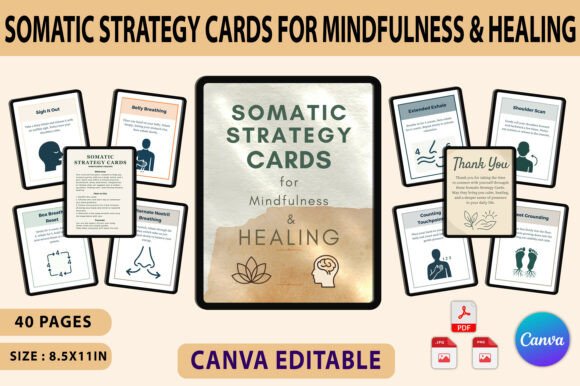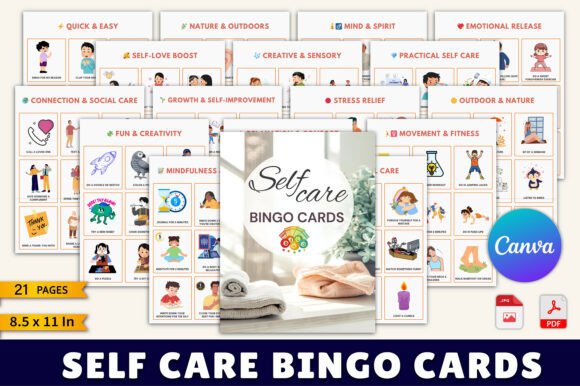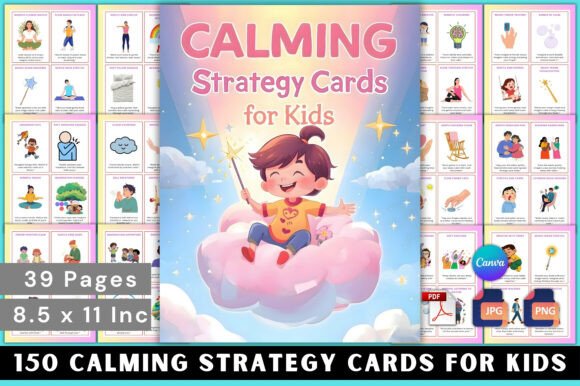
🌈 150 Calming Strategy Cards for Kids
When a child melts down in the middle of circle time, or freezes before a spelling test, or bursts into tears after losing a board game — it’s not “bad behavior.” It’s a nervous system overwhelmed. What’s missing isn’t discipline. It’s a toolkit — simple, visual, and ready-to-use — that helps kids name what they feel, pause before reacting, and gently return to calm. That’s where the 🌈 150 Calming Strategy Cards for Kids step in: not as a quick fix, but as a consistent, compassionate bridge between big feelings and grounded awareness.
Real Moments, Real Uses — Not Just Theory
These aren’t abstract mindfulness concepts wrapped in pastel graphics. They’re 150 concrete, printable prompts designed for real life — the kind you pull out *when* you need them, not just *after* things go sideways.
In a third-grade classroom, Ms. Lee keeps a laminated stack in her “calm corner.” When Leo starts tapping his pencil hard and avoiding eye contact, she quietly slides him the “Balloon Breathing” card — illustrated with a kid blowing up a balloon, then slowly letting air out. He follows along without needing verbal instruction. Two minutes later, he’s back at his desk, shoulders relaxed, ready to rejoin the lesson.
At home, Maya (a homeschooling parent of two) uses the cards during transition times — like right after lunch, when energy spikes and focus drops. She’ll draw three cards at random: “Trace Your Fingers Slowly,” “Listen for 3 Sounds Around You,” and “Draw a Safe Place.” Her kids treat it like a gentle game — and the shift in mood is immediate and measurable.
In a pediatric occupational therapy session, Alex uses the cards to co-create regulation plans with clients. Instead of saying, “Let’s try deep breathing,” he asks, “Which card feels most doable today?” That small act of choice builds agency — especially for neurodivergent kids who may resist top-down direction but thrive with visual, self-paced options.
Who Benefits — And How It Fits Their World
Educators use these cards to embed social-emotional learning (SEL) without adding prep time. No lesson plans needed — just print, cut, and rotate. The 8.5 x 11 size makes them easy to display on a bulletin board or attach to a ring for portable access. Bonus: many strategies double as brain breaks — think “5-4-3-2-1 Grounding Walk” or “Shoulder Roll & Smile” — helping students reset mid-afternoon without derailing academic flow.
Therapists and counselors appreciate the clinical grounding behind each activity. These aren’t random “feel-good” ideas — they map directly to evidence-informed practices: diaphragmatic breathing for vagal tone, bilateral movement for nervous system regulation, sensory-based grounding for anxiety, and expressive arts for emotional literacy. The Canva-editable link lets them personalize language or add client-specific visuals — say, swapping generic “tree” imagery for a drawing of the child’s actual backyard oak.
Creative entrepreneurs and content creators are using the PDFs in unexpected ways: embedding cards into digital calm kits for parents’ newsletters, printing mini versions for wellness subscription boxes, or filming short “Card of the Day” reels for Instagram. Because the file includes high-resolution, print-ready layouts, there’s no quality loss when adapting for physical or digital products.
Small business owners running kid-focused studios — like yoga for children, art therapy spaces, or after-school enrichment programs — integrate the cards into their intake process. New families receive a starter set as part of orientation. It signals care, consistency, and intentionality — and gives caregivers something tangible to continue the work at home.
What to Consider Before You Download
These cards work best when treated as a *living resource*, not a static product. Here’s what makes the difference:
- Consistency beats intensity. Using one card daily — even for 60 seconds — builds neural pathways faster than doing ten cards once a week. Think of them like emotional vitamins: small, regular doses matter more than occasional mega-doses.
- Modeling matters more than instruction. Kids learn regulation by watching adults regulate. Try doing “Cloud Watching Visualization” alongside your child — not to “fix” them, but to share the experience. That subtle shift from “you need calming” to “we’re calming together” changes everything.
- Not all cards land the same way — and that’s okay. A child who loves movement might light up with “Shake Out Your Hands Like a Rainstick,” while another finds comfort in “Color One Circle Slowly.” Keep a few favorites visible, rotate others weekly, and retire any that consistently trigger resistance — without judgment.
- Print quality affects usability. These are designed for crisp 8.5 x 11 printing — so if you’re planning bulk use in classrooms or clinics, invest in matte cardstock and a good laminator. The tactile durability makes a real difference during repeated handling.
More Than Calm — It’s Capacity Building
Over time, using the 🌈 150 Calming Strategy Cards for Kids does something quiet but profound: it rewires how children relate to their inner world. They begin to recognize early signs of overwhelm — the tight jaw, the hot ears, the urge to shout — and reach for a strategy *before* escalation. That’s emotional intelligence in action. That’s resilience being practiced, not preached.
And for the adults guiding them? It reduces decision fatigue. No more scrambling for “what do I say now?” You have 150 thoughtful, tested, kid-resonant responses — already written, illustrated, and organized. That’s not just convenience. It’s compassion — for the child, and for yourself.
Whether you’re leading a classroom of 25, supporting one child through big transitions, designing digital wellness tools, or simply trying to keep your own home atmosphere steady — these cards meet you where you are. They don’t promise perfection. They offer presence. One breath, one stretch, one grounded moment at a time.