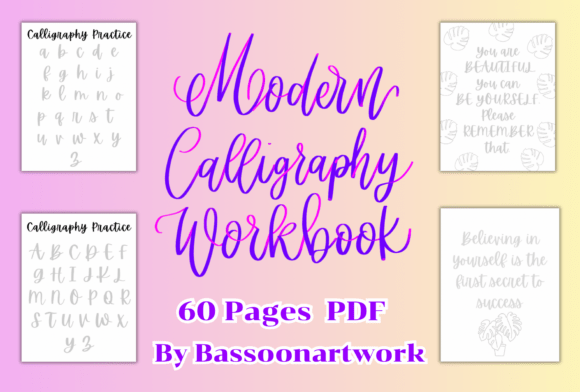
Modern Calligraphy Workbook
In a world where digital interfaces dominate communication—emails stack up, notifications blink incessantly, and fonts render in perfect uniformity—the quiet act of forming letters by hand has quietly regained resonance. Not as nostalgia, but as intention. The Modern Calligraphy Workbook meets this shift not with resistance to technology, but with thoughtful alignment: it’s a tactile, structured entry point for adults who want to reclaim expressive handwriting—not as a relic, but as a living skill that complements how we live, work, and connect today.
More Than Pretty Letters: Why This Workbook Fits Real Life
This isn’t a calligraphy course disguised as art therapy or a rigid academic syllabus. The Modern Calligraphy Workbook is built on observation: many adults don’t lack interest—they lack accessible, low-pressure scaffolding. A marketing manager might sketch headlines in a notebook before pitching; an educator may hand-letter classroom posters to reinforce visual memory; a small-business owner could personalize thank-you notes to stand out in a sea of automated follow-ups. These aren’t “hobby moments.” They’re functional extensions of voice, brand, and presence.
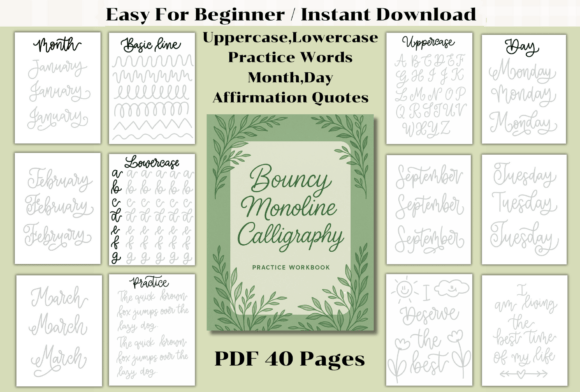
The workbook responds by starting where most people actually are: at the pen tip. It opens not with flourished words, but with foundational stroke drills—thin upstrokes, controlled downstrokes, consistent pressure transitions. Each exercise is timed, repeatable, and designed to build neuromuscular coordination without overwhelm. There’s no assumption of prior experience, no expectation of innate talent. Instead, there’s rhythm, repetition, and room to notice progress week over week.
How Hand-Lettering Is Evolving Beyond Aesthetic Trends
Five years ago, “modern calligraphy” often meant Instagram-perfect place cards or quote graphics with heavy shadows and gold foil. Today, the emphasis has shifted toward authenticity, adaptability, and integration. Designers layer hand-lettered headers over clean digital layouts. Educators embed custom lettering into printable learning tools. Content creators film short-form videos showing their process—not just the polished result. The value isn’t in perfection, but in the visible human trace: slight variation in slant, natural ink bleed, a pause captured in a softened curve.
The Modern Calligraphy Workbook reflects this evolution. Its alphabet tracing pages include subtle guidance on spacing and rhythm—not just shape—and its step-by-step exercises encourage variation early: “Try this ‘a’ with lighter pressure,” or “Now write it slightly narrower to fit beside an ‘n’.” It treats letterforms as flexible tools, not fixed icons. That mindset matters whether you’re drafting a wedding invitation or sketching a client-facing mood board.
Practical Integration—Not Just Practice Sheets
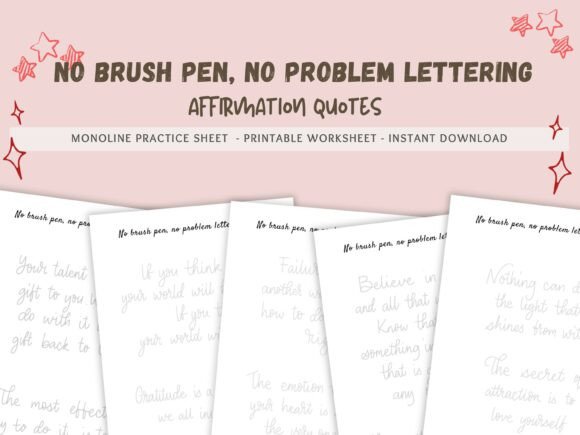
A common friction point for adult learners is transfer: how does practicing ‘o’s and ‘v’s translate to real use? The Modern Calligraphy Workbook bridges that gap deliberately. After mastering individual letters, it guides users through word-building—first two-letter combinations (“it,” “on”), then rhythmic phrases (“slow down,” “make space”)—with attention to letter connection, baseline consistency, and visual balance. Later sections introduce layout concepts: sizing hierarchy, margin awareness, and simple composition for quotes or short messages.
This progression mirrors how professionals actually apply the skill. A freelance graphic designer might use those same principles to hand-draw a logo lockup before vectorizing it. A blogger could draft social captions by hand to refine tone before typing them out. Even someone journaling daily gains nuance: noticing how a stressed “I” looks different from a relaxed one becomes a subtle form of self-awareness—not just pen control.
What Changes When Muscle Memory Takes Root
It’s easy to underestimate how much daily communication relies on automatic gesture. Typing, swiping, clicking—all happen below conscious attention once learned. Hand-lettering follows similar logic, but requires retraining. The Modern Calligraphy Workbook supports that retraining by isolating variables: one session focuses solely on exit strokes, another on consistent x-height, another on maintaining even spacing across varied letter widths.
Over time, users report shifts beyond aesthetics: improved focus during practice (not as meditation, but as deep attention), greater tolerance for iterative work (“I’ll try this line three times until it feels right”), and increased confidence in making intentional visual choices—even outside calligraphy. One educator shared how using the workbook helped her students identify letter formation patterns more clearly during literacy instruction. Another small-business owner began adding handwritten notes to packaging—simple, legible, warm—and saw repeat customers mention them unprompted in reviews.
Designed for Contemporary Constraints
This workbook assumes limited time, not unlimited patience. Pages are single-sided to prevent bleed-through, sized for standard 8.5” x 11” printers, and organized so you can open to any section without flipping back for instructions. There are no required tools—just a pencil or brush pen you already own—but optional tool notes appear contextually (e.g., “If using a flexible nib, rest your pinky lightly on the page for stability”).
It also respects digital habits. While the practice is analog, the mindset is hybrid: suggestions for scanning finished pages to build a personal font reference library, tips for photographing lettering to share in design critiques or client presentations, and gentle prompts like “Write today’s date in three styles—then pick one to use in your next email signature.” No pressure to go fully offline—just permission to bring more intentionality into what you already do.
Who Benefits—and How It Shows Up
- Freelancers & creatives: Use hand-lettered headings in pitch decks or client mood boards to signal thoughtfulness and differentiation—without needing illustration skills.
- Educators & trainers: Create custom worksheets, classroom banners, or feedback notes that feel personally invested—not templated.
- Entrepreneurs & small business owners: Add handwritten elements to packaging inserts, loyalty cards, or launch announcements—small touches that increase perceived care and memorability.
- Professionals managing stress or screen fatigue: A 10-minute stroke drill serves as a tangible reset—grounding attention without demanding emotional output.
- Hobbyists exploring craft: Build transferable skills—spacing, proportion, rhythm—that apply to watercolor lettering, embroidery, or even digital type design.
None of these outcomes require mastery. They begin with consistency—and consistency begins with structure. That’s where the Modern Calligraphy Workbook earns its place: not as a destination, but as a reliable companion for the early, essential stages of learning.
Realistic Expectations, Tangible Growth
There’s no claim here that 30 minutes a day will turn anyone into a master penman in six weeks. What the Modern Calligraphy Workbook supports is steady, observable growth: week one, your downstrokes waver; week four, they hold steadier under light pressure; week eight, you catch yourself adjusting spacing instinctively while writing a grocery list. That kind of progress compounds—not just in appearance, but in decision-making confidence, visual literacy, and creative agency.
It also acknowledges that motivation fluctuates. The workbook includes reflection prompts (“What felt easier this week?” “Which letter still surprises you?”) not for grading, but for anchoring attention to micro-wins. And because it’s designed around incremental difficulty—not arbitrary complexity—it avoids the burnout that comes from jumping too fast into flourishes or full compositions before the fundamentals settle in.
In an era where attention is fragmented and tools multiply, choosing to slow down and shape letters by hand is itself a quiet act of clarity. The Modern Calligraphy Workbook doesn’t ask you to reject digital life—it invites you to enrich it with something only you can make: handwriting that carries your pace, your pause, your presence. Start there. The rest unfolds from practice, not pressure.